Recently, a farmer from Namibia—who operates a medium-sized livestock farm—purchased a machine à faire des balles d'ensilage from our company. Given Namibia’s arid climate, the proper storage of forage is critical to the farm’s daily operations. Consequently, he sought to acquire a silage baler to facilitate his silage production efforts.
Au début, il était assez sensible au prix. Cependant, après des discussions approfondies, la revue de nos nombreux succès sur le marché africain, et une compréhension détaillée de notre support de pièces détachées, de la qualité de nos machines et de notre service après-vente, il a finalement décidé d’acheter chez nous. Il a passé commande pour notre modèle 55-52, une balleuse-encaisseuse entièrement automatique et intégrée. Cliquez pour en savoir plus !
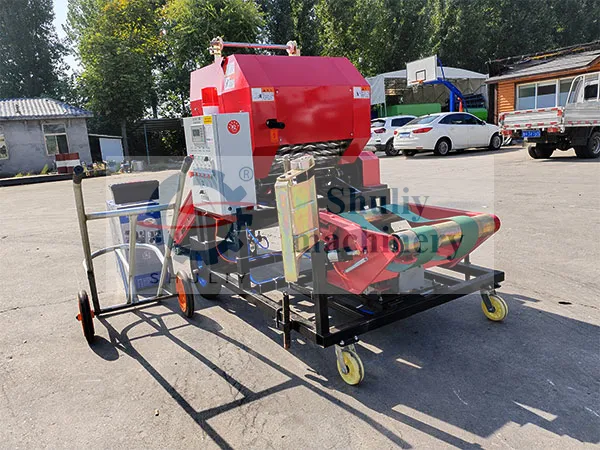
Configuration de base de cette machine à faire des balles de ensilage
Pour répondre aux exigences spécifiques de ce client, nous avons équipé cette unité d'un pack d'alimentation haute performance :
18-Horsepower Electric-Start Diesel Engine: Powerful and robust, this engine features a one-touch start function, ensuring the equipment can operate autonomously—even in remote pastures lacking grid power coverage.
Integrated Battery Charging System: This critical feature earned high praise from the client, as it ensures the power system remains in optimal operating condition throughout extended periods of continuous operation.
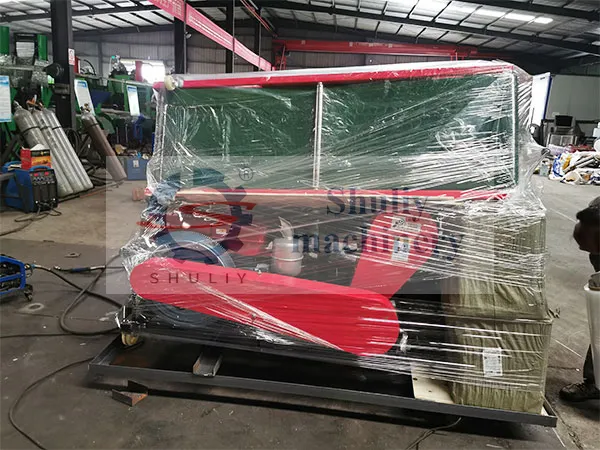
Compact Body Design: With overall dimensions of 2135 × 1350 × 1300 mm and a total weight of 850 kg, the unit strikes a perfect balance between operational stability and flexibility for transport and relocation.
Results and Benefits
Sur la base des spécifications techniques haute performance de cette machine à fabriquer des balles de ensilage, notre analyse du retour sur investissement (ROI) a efficacement dissipé les préoccupations initiales du client concernant le prix :
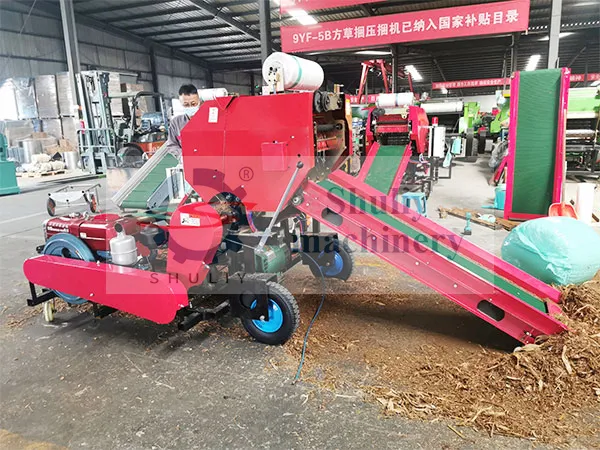
High-Efficiency Production: The Model TZ-55-52 silage bale making machine processes 60 to 65 bales per hour, achieving an impressive output of 5 to 6 tons per hour.
Superior Density: The machine produces bales with a density reaching 450–500 kg/m³, with individual bale weights ranging from 65 to 100 kilograms. This high-density baling technology is crucial for ensuring optimal fermentation of silage and preserving its nutritional value over the long term.
Consumable Cost Savings: The machine features extremely low consumption of plastic netting—requiring only 2.5 kilograms of netting per ton of processed forage—thereby significantly reducing daily operating expenses.
Why choose us as silage baling machine supplier?
Le client namibien a finalement décidé de passer commande chez nous pour plusieurs raisons — au-delà des spécifications techniques de la machine — notamment :
Extensive Experience and Case Studies in the African Market: We provided localized success stories from Sudan, Kenya, and South Africa as evidence, convincingly demonstrating that our machines are fully capable of meeting operational demands in harsh environments characterized by high temperatures and heavy dust.
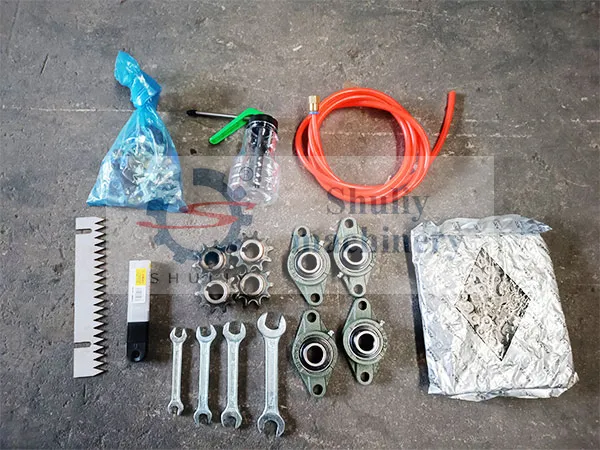
Complimentary High-Quality Spare Parts: We included a set of core consumable parts with the machine delivery. This gesture not only alleviated the client’s concerns regarding potential downtime and repair costs but also significantly enhanced the perceived value of the product.
Exceptional Cost-Performance Ratio: The equipment features a 1.1 to 3 kW wrapping power system and supports three-phase power switching capabilities, allowing it to flexibly adapt to the farm’s existing electrical infrastructure.
Customer feedback
La machine à fabriquer des balles de ensilage modèle 55-52 est désormais opérationnelle en Namibie.
« Les balles à haute densité (550×520mm) facilitent la manutention et le stockage avec un chariot élévateur. Le silage stocké de cette manière présente une perte minimale de nutriments, répondant efficacement au déficit de fourrage en saison sèche. Bien que l’investissement initial ait semblé conséquent, son efficacité et le support des accessoires en font un investissement très rentable. » — Retour d’expérience de notre partenaire namibien.